Black Streaks Running Down Your Roof? What Those Stains Actually Are
Real estate professionals broadly agree that neutral exterior and interior palettes generate the widest buyer appeal. Neutrals do not alienate buyers who cannot visualize past a bold personal choice, and they photograph well in listing images, which is where most buyer decisions begin.
Popular exterior palettes for 2024 and 2025 have leaned toward warm whites with contrasting dark trim, soft sage greens paired with warm wood accents, and gray-blue tones with crisp white detailing. These combinations feel current without being trend-dependent, which means they will not feel dated within a year.
Neutral Palettes That Sell
When Unique Colors Work in Your Favor
In neighborhoods where homes tend to look similar, a thoughtfully distinct color can make a property stand out in listing searches and in person. The key is contrast within context. A home that reads as intentional and well-maintained in a color that differs from its neighbors gains attention without appearing out of place.
Consulting a color expert or using digital rendering tools to preview color combinations before committing eliminates the guesswork and reduces the risk of a choice that narrows rather than expands buyer interest.
Quick Answer: Those black streaks running down your roof are almost never dirt. In the vast majority of cases they are a blue-green algae called Gloeocapsa magma that feeds on the limestone filler in asphalt shingles. The streaks look black because the algae grows a dark, UV-resistant coating to shield itself from the sun. It is airborne, so it drifts from roof to roof and settles first on the shaded, moisture-holding slopes. Left alone it holds moisture against the shingles, contributes to granule loss, and slowly ages the roof. It also cannot be safely blasted off with a pressure washer, which is exactly the wrong tool for the job.
You pull into the driveway, glance up, and there they are again: dark vertical streaks bleeding down from the ridge, worse on one side of the roof than the other, almost like the shingles are rusting. A neighbor tells you it is dirt. Someone else swears it is mold. A third person says it will wash right off with a pressure washer. None of that is quite right, and one of those suggestions can actually shorten the life of your roof.
Across Central Florida, from Winter Haven to Lake Wales, those streaks are one of the most common things homeowners notice from the street. The warm, humid, rain-soaked climate here is close to ideal for what is actually causing them. Before you reach for a hose or hand the job to whoever knocks on the door, it helps to understand what the stains really are, why they show up where they do, and why the way you remove them matters as much as removing them at all.
Real estate professionals broadly agree that neutral exterior and interior palettes generate the widest buyer appeal. Neutrals do not alienate buyers who cannot visualize past a bold personal choice, and they photograph well in listing images, which is where most buyer decisions begin.
Popular exterior palettes for 2024 and 2025 have leaned toward warm whites with contrasting dark trim, soft sage greens paired with warm wood accents, and gray-blue tones with crisp white detailing. These combinations feel current without being trend-dependent, which means they will not feel dated within a year.
Neutral Palettes That Sell
When Unique Colors Work in Your Favor
In neighborhoods where homes tend to look similar, a thoughtfully distinct color can make a property stand out in listing searches and in person. The key is contrast within context. A home that reads as intentional and well-maintained in a color that differs from its neighbors gains attention without appearing out of place.
Consulting a color expert or using digital rendering tools to preview color combinations before committing eliminates the guesswork and reduces the risk of a choice that narrows rather than expands buyer interest.
What the Black Streaks Actually Are
The stains are a living organism, not a layer of grime. The most common culprit by far is Gloeocapsa magma, an airborne algae, technically a cyanobacterium, that thrives in warm, humid environments and is the most prevalent species behind roof discoloration across the United States and Canada. The Asphalt Roofing Manufacturers Association, the trade body for shingle makers, identifies it as the primary cause of the brown-to-black discoloration homeowners see, and notes it is most widespread in the Gulf States and along the humid Southeast, which puts Polk County squarely in its territory.
Here is the part that surprises most people: the algae itself is blue-green, not black. As it grows on a sun-exposed roof, it develops a dark, protective outer sheath to shield its cells from ultraviolet light. That dark coating is what you see as a black streak. So the color you are looking at is essentially the algae's sunscreen, built up over time as the colony spreads.
Why it favors asphalt shingles.
Asphalt shingles are made with a mineral filler, and that filler contains limestone, or calcium carbonate. Gloeocapsa magma feeds on that calcium carbonate. In other words, your roof is not just a surface the algae landed on, it is a food source. That is why the growth tends to settle in and spread rather than simply blow away, and why a quick rinse never seems to keep it gone for long.
Real estate professionals broadly agree that neutral exterior and interior palettes generate the widest buyer appeal. Neutrals do not alienate buyers who cannot visualize past a bold personal choice, and they photograph well in listing images, which is where most buyer decisions begin.
Popular exterior palettes for 2024 and 2025 have leaned toward warm whites with contrasting dark trim, soft sage greens paired with warm wood accents, and gray-blue tones with crisp white detailing. These combinations feel current without being trend-dependent, which means they will not feel dated within a year.
Neutral Palettes That Sell
When Unique Colors Work in Your Favor
In neighborhoods where homes tend to look similar, a thoughtfully distinct color can make a property stand out in listing searches and in person. The key is contrast within context. A home that reads as intentional and well-maintained in a color that differs from its neighbors gains attention without appearing out of place.
Consulting a color expert or using digital rendering tools to preview color combinations before committing eliminates the guesswork and reduces the risk of a choice that narrows rather than expands buyer interest.
Why It Runs in Streaks and Favors One Side
The pattern is a clue, not a coincidence. Because the algae is airborne, spores drift onto the roof and tend to collect near the ridge and the upper courses first. Rain then carries the growth downward along the slope, which is why you so often see it as vertical streaks trailing from the peak toward the gutters rather than as random blotches.
You have probably also noticed the streaks are worse on one side of the house. That side is almost always the one that gets the least sun. North-facing and shaded slopes stay damp longer after Florida's afternoon storms and morning dew, and that lingering moisture is exactly what the algae needs to establish and multiply. A slope baking in full afternoon sun dries out fast and stays less hospitable; the shaded slope holds water, so it feeds the colony.
That is also why algae is different from the other things people confuse it with. Moss and tree droppings usually produce only localized discoloration, a patch here or a clump there, rather than the sweeping vertical streaks that algae creates. If the marks run in long dark lines down the slope and concentrate on the shaded side, algae is the likeliest answer.
Tip: Before you assume the whole roof is failing, walk to the street and look at where the streaks sit. Growth that starts near the ridge and streaks downward, heaviest on the shaded northern slope, is the classic signature of algae rather than a roofing defect. That single observation tells a cleaning pro a great deal about what they are dealing with.
Real estate professionals broadly agree that neutral exterior and interior palettes generate the widest buyer appeal. Neutrals do not alienate buyers who cannot visualize past a bold personal choice, and they photograph well in listing images, which is where most buyer decisions begin.
Popular exterior palettes for 2024 and 2025 have leaned toward warm whites with contrasting dark trim, soft sage greens paired with warm wood accents, and gray-blue tones with crisp white detailing. These combinations feel current without being trend-dependent, which means they will not feel dated within a year.
Neutral Palettes That Sell
When Unique Colors Work in Your Favor
In neighborhoods where homes tend to look similar, a thoughtfully distinct color can make a property stand out in listing searches and in person. The key is contrast within context. A home that reads as intentional and well-maintained in a color that differs from its neighbors gains attention without appearing out of place.
Consulting a color expert or using digital rendering tools to preview color combinations before committing eliminates the guesswork and reduces the risk of a choice that narrows rather than expands buyer interest.
Is It Actually Hurting the Roof, or Just the Curb Appeal
For a while, the honest answer is that it is mostly cosmetic, but that changes with time. The stains are unattractive and they can drag down the look of an otherwise well-kept home, which matters if you care about curb appeal or are thinking about selling. But the damage question is more nuanced.
Roofing sources note there is not strong scientific evidence that the algae directly eats through a shingle overnight. The concern is slower and more indirect. The limestone and calcium carbonate the algae consumes are part of what keeps a shingle stable and intact, so over time the feeding can contribute to granule loss and gradual deterioration, leaving shingles more vulnerable to wear. Just as important, a mat of algae holds moisture against the roof surface long after the rain stops, and constant dampness is hard on any roofing system in a climate like ours.
There is an energy angle too. Those dark streaks absorb heat instead of reflecting it. On a light-colored roof that is slowly turning dark, that added heat load can make the space below warmer and push your cooling system to work harder through a Florida summer. None of this is a five-alarm emergency, but it is a real reason not to just let the growth spread unchecked for years.
Real estate professionals broadly agree that neutral exterior and interior palettes generate the widest buyer appeal. Neutrals do not alienate buyers who cannot visualize past a bold personal choice, and they photograph well in listing images, which is where most buyer decisions begin.
Popular exterior palettes for 2024 and 2025 have leaned toward warm whites with contrasting dark trim, soft sage greens paired with warm wood accents, and gray-blue tones with crisp white detailing. These combinations feel current without being trend-dependent, which means they will not feel dated within a year.
Neutral Palettes That Sell
When Unique Colors Work in Your Favor
In neighborhoods where homes tend to look similar, a thoughtfully distinct color can make a property stand out in listing searches and in person. The key is contrast within context. A home that reads as intentional and well-maintained in a color that differs from its neighbors gains attention without appearing out of place.
Consulting a color expert or using digital rendering tools to preview color combinations before committing eliminates the guesswork and reduces the risk of a choice that narrows rather than expands buyer interest.
Why Pressure Washing Is the Wrong Fix
This is the single most important thing to understand before anyone touches the roof. It is tempting to treat black streaks like dirt on a driveway and blast them off with a pressure washer. On a roof, that approach does real harm.
The Asphalt Roofing Manufacturers Association is blunt about it: do not use a power washer, brush, or broom to clean algae from a roof. High-pressure washing is likely to damage asphalt roofing and should not be used to remove algae or any other stain. The force strips away the protective granules that shield the shingle from the sun, and once those granules are gone they do not come back. You can end up trading a cosmetic stain for genuine, permanent damage, and in many cases voiding the shingle warranty in the process.
There is a second problem with blasting. Even when high pressure knocks the visible streaks loose, it does not kill the organism. The algae is feeding down at the surface of the shingle, and scattering the top layer of it with water leaves the colony alive to regrow, often within a season or two in our climate. You get a short-lived improvement and a damaged roof, which is the worst of both outcomes.
Warning: Beyond the damage to the shingles, a roof coated in algae, and especially one wet with any cleaning solution, becomes dangerously slick. ARMA specifically warns that it is hazardous to walk, climb, or work on a roof and recommends leaving the job to trained professionals. A DIY afternoon on a wet, steep, slippery slope is how people get badly hurt.
Real estate professionals broadly agree that neutral exterior and interior palettes generate the widest buyer appeal. Neutrals do not alienate buyers who cannot visualize past a bold personal choice, and they photograph well in listing images, which is where most buyer decisions begin.
Popular exterior palettes for 2024 and 2025 have leaned toward warm whites with contrasting dark trim, soft sage greens paired with warm wood accents, and gray-blue tones with crisp white detailing. These combinations feel current without being trend-dependent, which means they will not feel dated within a year.
Neutral Palettes That Sell
When Unique Colors Work in Your Favor
In neighborhoods where homes tend to look similar, a thoughtfully distinct color can make a property stand out in listing searches and in person. The key is contrast within context. A home that reads as intentional and well-maintained in a color that differs from its neighbors gains attention without appearing out of place.
Consulting a color expert or using digital rendering tools to preview color combinations before committing eliminates the guesswork and reduces the risk of a choice that narrows rather than expands buyer interest.
How the Stains Are Actually Removed
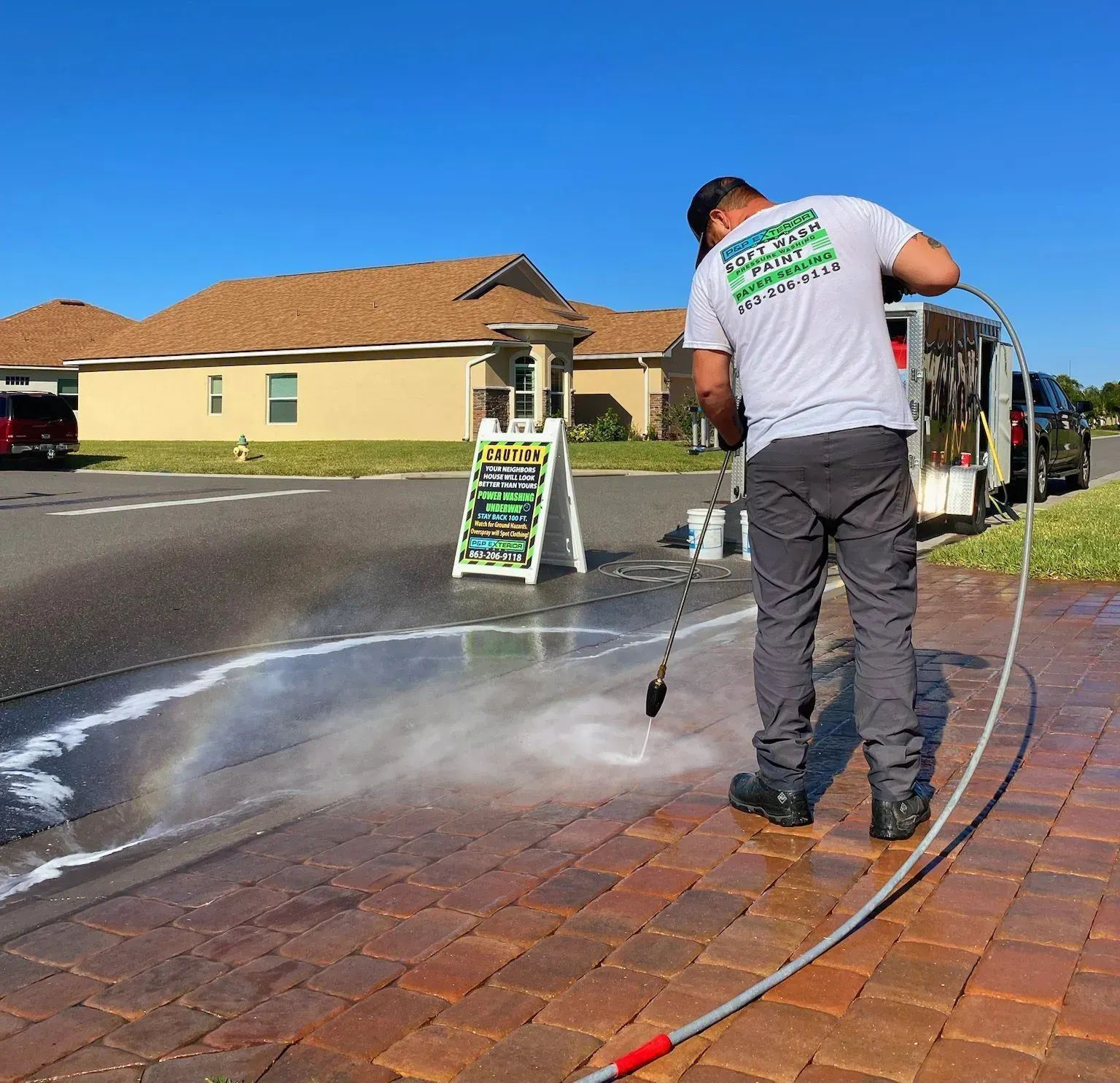
The correct method treats the problem as biology, not grime. Instead of relying on force, professional roof cleaning relies on chemistry through a process called soft washing. A low-pressure application, at pressures well below what a pressure washer produces and closer to a strong garden hose, carries a cleaning solution onto the roof.
That solution does the real work. It is typically built around sodium hypochlorite, the active ingredient in household bleach, blended with surfactants that help it cling and penetrate. ARMA itself notes that algae discoloration may be lightened with a solution of sodium hypochlorite and water, gently dispersed and then rinsed, with scrubbing avoided so the granules stay put. The solution breaks down and kills the algae at the cellular level rather than just knocking the top off it.
Because the treatment actually kills the organism instead of merely rinsing the surface, the results last considerably longer than a pressure blast would. The colony is dead, not disturbed, so it takes far longer to reestablish. Done properly, soft washing is also the approach most shingle manufacturers point to as safe for asphalt, since it cleans without stripping granules or lifting shingle edges. It is gentle on the roof and hard on the algae, which is exactly the balance you want.
Tip: When growth is heavy, a careful, even application that is allowed to dwell and then rinsed gently does more than any amount of scrubbing. The chemistry needs a little time to work, and rushing it or agitating the surface is what damages granules. Patience is part of the method, not a shortcut around it.
Real estate professionals broadly agree that neutral exterior and interior palettes generate the widest buyer appeal. Neutrals do not alienate buyers who cannot visualize past a bold personal choice, and they photograph well in listing images, which is where most buyer decisions begin.
Popular exterior palettes for 2024 and 2025 have leaned toward warm whites with contrasting dark trim, soft sage greens paired with warm wood accents, and gray-blue tones with crisp white detailing. These combinations feel current without being trend-dependent, which means they will not feel dated within a year.
Neutral Palettes That Sell
When Unique Colors Work in Your Favor
In neighborhoods where homes tend to look similar, a thoughtfully distinct color can make a property stand out in listing searches and in person. The key is contrast within context. A home that reads as intentional and well-maintained in a color that differs from its neighbors gains attention without appearing out of place.
Consulting a color expert or using digital rendering tools to preview color combinations before committing eliminates the guesswork and reduces the risk of a choice that narrows rather than expands buyer interest.
Keeping It From Coming Straight Back
Killing the algae is step one; slowing its return is step two. Because the spores are airborne and drift in from surrounding roofs and trees, you cannot make a roof permanently immune, but you can make it less inviting. A few conditions on your own property feed the growth and are worth addressing.
Overhanging branches that shade the roof keep slopes damp and drop debris and organic matter that hold moisture, so trimming them back lets more sun reach the surface and helps it dry. Keeping gutters clear matters too, because algae and organic buildup often take hold along the roofline where water and debris collect. Anything that helps the roof shed water and dry out faster works against the algae, and in a humid place like Polk County that drying window is everything.
For homeowners eventually facing a reroof, algae-resistant shingles are worth knowing about. Manufacturers now make shingles with copper or zinc-bearing granules that inhibit algae growth for years, since those metals are hostile to the organism. That is a longer-term consideration rather than a fix for the streaks you have today, but it is a genuine option when the time comes.
Real estate professionals broadly agree that neutral exterior and interior palettes generate the widest buyer appeal. Neutrals do not alienate buyers who cannot visualize past a bold personal choice, and they photograph well in listing images, which is where most buyer decisions begin.
Popular exterior palettes for 2024 and 2025 have leaned toward warm whites with contrasting dark trim, soft sage greens paired with warm wood accents, and gray-blue tones with crisp white detailing. These combinations feel current without being trend-dependent, which means they will not feel dated within a year.
Neutral Palettes That Sell
When Unique Colors Work in Your Favor
In neighborhoods where homes tend to look similar, a thoughtfully distinct color can make a property stand out in listing searches and in person. The key is contrast within context. A home that reads as intentional and well-maintained in a color that differs from its neighbors gains attention without appearing out of place.
Consulting a color expert or using digital rendering tools to preview color combinations before committing eliminates the guesswork and reduces the risk of a choice that narrows rather than expands buyer interest.
Frequently Asked Questions
Are the black streaks on my roof mold or algae?
Most black roof streaks are algae, specifically Gloeocapsa magma, rather than mold. Algae creates long dark streaks running down the roof slope, especially on shaded areas. Mold usually appears as isolated patches instead of the characteristic streaking pattern seen here.
Why is the roof darker on the north side of the house?
The north side usually receives less direct sunlight, so it stays damp longer after rain and morning dew. That extra moisture creates ideal conditions for algae growth, while sunnier roof sections dry faster and are less likely to develop dark streaks.
Will the black streaks damage my roof if I ignore them?
Yes. While black streaks often begin as a cosmetic issue, algae can gradually feed on materials within the shingles and contribute to granule loss. The growth also traps moisture and absorbs heat, which can shorten the roof's lifespan over time.
Can I just pressure wash the streaks off myself?
No. Pressure washing can strip protective granules from asphalt shingles and cause permanent roof damage. It often removes the visible stain without killing the algae itself, allowing streaks to return. A professional low-pressure soft wash is the safer, longer-lasting cleaning method.
How long will a professional roof cleaning last?
A professional soft wash generally lasts much longer than pressure washing because it kills the algae instead of merely rinsing the surface. In humid Central Florida, many roofs stay noticeably cleaner for several years, although heavily shaded homes may require cleaning sooner.
How can I keep the algae from coming back so fast?
Reduce shade by trimming overhanging branches, keep gutters and roof surfaces free of debris, and improve drainage so the roof dries faster after rain. These steps make conditions less favorable for algae growth and help professional roof cleanings last significantly longer.
Real estate professionals broadly agree that neutral exterior and interior palettes generate the widest buyer appeal. Neutrals do not alienate buyers who cannot visualize past a bold personal choice, and they photograph well in listing images, which is where most buyer decisions begin.
Popular exterior palettes for 2024 and 2025 have leaned toward warm whites with contrasting dark trim, soft sage greens paired with warm wood accents, and gray-blue tones with crisp white detailing. These combinations feel current without being trend-dependent, which means they will not feel dated within a year.
Neutral Palettes That Sell
When Unique Colors Work in Your Favor
In neighborhoods where homes tend to look similar, a thoughtfully distinct color can make a property stand out in listing searches and in person. The key is contrast within context. A home that reads as intentional and well-maintained in a color that differs from its neighbors gains attention without appearing out of place.
Consulting a color expert or using digital rendering tools to preview color combinations before committing eliminates the guesswork and reduces the risk of a choice that narrows rather than expands buyer interest.
Reading Your Roof for What It Really Needs
Those streaks are not dirt, and they are not a sign the roof is falling apart. They are a living algae colony that drifted in on the wind, found a food source in the limestone of your shingles, and spread down the shaded, damp slopes where our Central Florida climate keeps things wet. Understanding that changes how you deal with it: this is a growth to be killed at the root with the right chemistry, not a stain to be blasted off with brute force. The difference between those two approaches is the difference between a roof that stays clean and protected and one that ends up stripped of its granules and streaked all over again.
Schedule a
professional soft wash for your streaked roof — Those dark streaks are a live algae colony feeding on your shingles and holding moisture against them, and every season you wait lets it spread across more of the roof and slip toward permanent granule loss. With 15 years of experience, P&P Exterior Wash, LLC uses a low-pressure soft wash built around a proper cleaning solution to kill the Gloeocapsa magma at the root and lift the streaks without the granule-stripping damage a pressure washer would cause, all while working safely on roofs throughout Polk County, Florida. Reach out to book a roof soft washing assessment and get your shingles back to a clean, even color that lasts.