Driveway Covered in Rust, Oil, or Tire Marks? What Actually Lifts Them
Real estate professionals broadly agree that neutral exterior and interior palettes generate the widest buyer appeal. Neutrals do not alienate buyers who cannot visualize past a bold personal choice, and they photograph well in listing images, which is where most buyer decisions begin.
Popular exterior palettes for 2024 and 2025 have leaned toward warm whites with contrasting dark trim, soft sage greens paired with warm wood accents, and gray-blue tones with crisp white detailing. These combinations feel current without being trend-dependent, which means they will not feel dated within a year.
Neutral Palettes That Sell
When Unique Colors Work in Your Favor
In neighborhoods where homes tend to look similar, a thoughtfully distinct color can make a property stand out in listing searches and in person. The key is contrast within context. A home that reads as intentional and well-maintained in a color that differs from its neighbors gains attention without appearing out of place.
Consulting a color expert or using digital rendering tools to preview color combinations before committing eliminates the guesswork and reduces the risk of a choice that narrows rather than expands buyer interest.
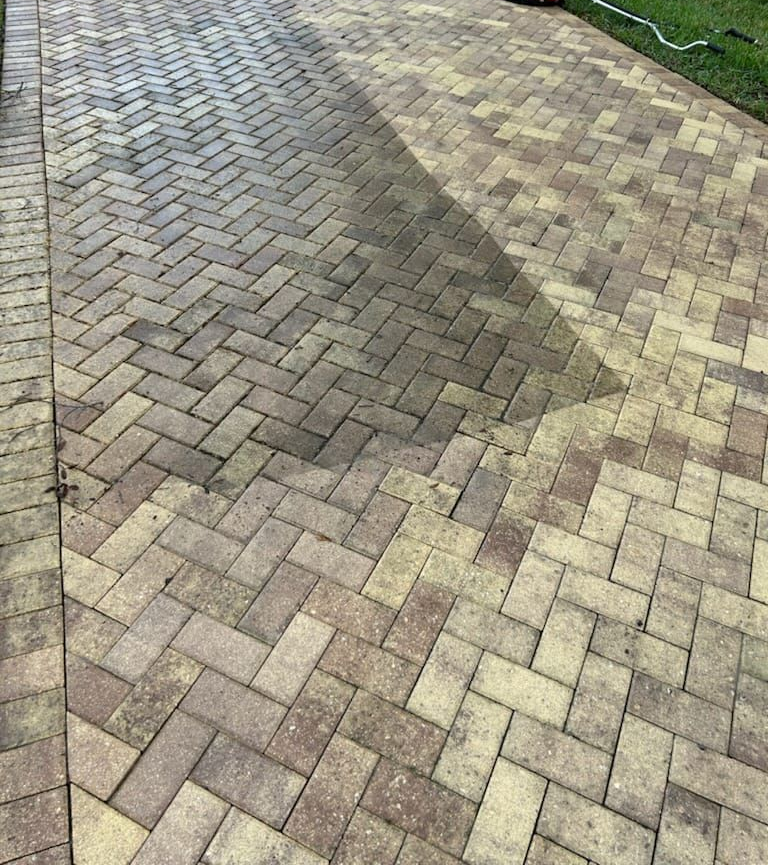
You've hosed off the driveway a dozen times and those dark patches by the garage door still won't budge. Plain water and a garden nozzle were never going to touch them. What it actually takes is matching the stain to the method.
You back the truck out one Saturday morning and finally look down instead of past it. The spot where the mower sits has gone the color of wet cardboard. Two rusty half-moons mark where the old grill legs stood for a summer. A pair of tire shadows curve toward the street where the sedan turns every morning before work. None of it washed away with the hose, and a quick scrub with dish soap barely dented it. That's not a cleaning failure on your part. Oil, rust, and tire residue are three different problems that happen to look similar on the surface, and each one needs its own approach to come out.
Quick Answer:
Oil and grease soak into the pores of concrete and pavers and need a degreaser that breaks down the petroleum before rinsing, not just soap and water. Rust comes from oxidizing metal leaching iron into the surface and responds to an acid-based rust treatment, not a standard cleaner. Tire marks are transferred rubber compound bonded to the surface by heat and friction, and they lift best with hot water and mechanical agitation from a surface cleaner. A single all-purpose wash rarely handles all three, which is why driveways that get "pressure washed" every year or two often still show old stains underneath.
Real estate professionals broadly agree that neutral exterior and interior palettes generate the widest buyer appeal. Neutrals do not alienate buyers who cannot visualize past a bold personal choice, and they photograph well in listing images, which is where most buyer decisions begin.
Popular exterior palettes for 2024 and 2025 have leaned toward warm whites with contrasting dark trim, soft sage greens paired with warm wood accents, and gray-blue tones with crisp white detailing. These combinations feel current without being trend-dependent, which means they will not feel dated within a year.
Neutral Palettes That Sell
When Unique Colors Work in Your Favor
In neighborhoods where homes tend to look similar, a thoughtfully distinct color can make a property stand out in listing searches and in person. The key is contrast within context. A home that reads as intentional and well-maintained in a color that differs from its neighbors gains attention without appearing out of place.
Consulting a color expert or using digital rendering tools to preview color combinations before committing eliminates the guesswork and reduces the risk of a choice that narrows rather than expands buyer interest.
Why These Three Stains Aren't the Same Problem
Most homeowners lump every driveway stain into one category: dirty concrete. It's an understandable assumption since they all show up as dark patches, but the chemistry underneath each one is different, and that difference determines what actually removes it.
Oil And Grease Soak In Before You Notice
Concrete and most pavers are porous. Under a microscope, the surface looks less like a solid slab and more like a sponge with a network of capillaries running through it. Fresh oil sits on top for a while, which is why a drip caught right away wipes up easily. Left alone, though, gravity and capillary action pull it down into that pore structure. Over weeks, the lighter compounds in the oil evaporate and the heavier ones oxidize and bind to the cement paste itself. At that point the stain isn't sitting on the surface anymore. It's part of it, which is why surface-level cleaning stops working the longer a spill sits.
Rust Comes From Metal, Not Dirt
Those orange-brown rings under patio furniture, grill legs, or a rusting downspout bracket aren't stains from something spilled. They're the result of iron oxide migrating out of the metal itself and into the surface below it, often carried by rainwater or condensation. Sprinkler heads that spray a fine mist of well water with high iron content cause the same effect across an entire section of driveway. Because the discoloration is mineral, not organic, it doesn't respond to degreasers or detergents at all. It needs a chemical reaction that converts the iron oxide into a soluble compound that rinses away.
Tire Marks Are Transferred Rubber, Not Residue
The black arcs where a car turns sharply or where tires sit in the same spot for months aren't dirt tracked in from the road. Under braking, turning, and the heat that builds between a tire and a hot driveway surface, a thin layer of the tire's rubber compound, including the carbon black that gives tires their color and the plasticizers that keep them flexible, transfers directly onto the concrete or paver surface. It bonds mechanically into the surface texture rather than sitting on top of it, which is why a splash of water and a broom move it around instead of removing it.
Real estate professionals broadly agree that neutral exterior and interior palettes generate the widest buyer appeal. Neutrals do not alienate buyers who cannot visualize past a bold personal choice, and they photograph well in listing images, which is where most buyer decisions begin.
Popular exterior palettes for 2024 and 2025 have leaned toward warm whites with contrasting dark trim, soft sage greens paired with warm wood accents, and gray-blue tones with crisp white detailing. These combinations feel current without being trend-dependent, which means they will not feel dated within a year.
Neutral Palettes That Sell
When Unique Colors Work in Your Favor
In neighborhoods where homes tend to look similar, a thoughtfully distinct color can make a property stand out in listing searches and in person. The key is contrast within context. A home that reads as intentional and well-maintained in a color that differs from its neighbors gains attention without appearing out of place.
Consulting a color expert or using digital rendering tools to preview color combinations before committing eliminates the guesswork and reduces the risk of a choice that narrows rather than expands buyer interest.
Why a Standard Wash Leaves Marks Behind
A basic rinse, even at moderate pressure, is built to remove what's sitting on the surface: loose dirt, pollen, leaf debris, cobwebs, the everyday grime that builds up between cleanings. None of that requires breaking a chemical bond. Oil, rust, and tire marks do.
Run a pressure washer over an oil stain with plain water and you'll often see the edges lighten while the core of the stain stays put, because the water is only moving the surface layer that never fully penetrated. Rust stains frequently look worse right after a plain-water wash because the surrounding concrete gets lighter while the mineral stain, unaffected by water alone, stands out even more by contrast. Tire marks tend to smear slightly under high pressure without disappearing, since mechanical force alone doesn't break the rubber's bond to the pores.
This is the gap that leads a lot of homeowners to conclude their driveway is simply "stained for good." In most cases it isn't. It just hasn't met the right combination of chemistry and technique yet.
Real estate professionals broadly agree that neutral exterior and interior palettes generate the widest buyer appeal. Neutrals do not alienate buyers who cannot visualize past a bold personal choice, and they photograph well in listing images, which is where most buyer decisions begin.
Popular exterior palettes for 2024 and 2025 have leaned toward warm whites with contrasting dark trim, soft sage greens paired with warm wood accents, and gray-blue tones with crisp white detailing. These combinations feel current without being trend-dependent, which means they will not feel dated within a year.
Neutral Palettes That Sell
When Unique Colors Work in Your Favor
In neighborhoods where homes tend to look similar, a thoughtfully distinct color can make a property stand out in listing searches and in person. The key is contrast within context. A home that reads as intentional and well-maintained in a color that differs from its neighbors gains attention without appearing out of place.
Consulting a color expert or using digital rendering tools to preview color combinations before committing eliminates the guesswork and reduces the risk of a choice that narrows rather than expands buyer interest.
Matching the Method to the Stain
Degreasing Lifts Oil At The Source
A concrete-safe degreaser is formulated to emulsify petroleum products, breaking the oil into smaller particles that water can carry away instead of just pushing around. Dwell time matters here more than pressure. The degreaser needs to sit long enough to work down into the same pores the oil traveled through, which is often several minutes rather than a quick spray-and-rinse. On stains that have had years to set, more than one application is common before the surface returns to its original color.
Acid-Based Treatments Pull Rust Out From Below
Rust removers used on hardscapes are typically built around a mild acid, such as oxalic acid, that reacts specifically with iron oxide and converts it into a form that dissolves in water. This is a targeted, spot treatment rather than a whole-driveway approach, since it's addressing a mineral reaction rather than general grime. Getting the concentration and dwell time right matters, since acid strong enough to dissolve rust can also affect the surface of certain pavers or stamped concrete finishes if it's misapplied or left too long.
Hot Water And Surface Cleaners Break Tire Marks Loose
Because tire residue is mechanically bonded rather than just sitting on the surface, heat helps soften it back toward a workable state, and a rotating surface cleaner combined with the right pressure and nozzle spacing provides even, consistent agitation across the whole mark instead of the streaky pattern a single wand tip often leaves. This combination lifts the transferred rubber without gouging the surface underneath it.
Tip: Whatever the stain, treat it in the order you'd expect: identify what actually caused the mark before choosing a product. A dark patch under a grill is almost always grease, not rust, even though grill legs are metal, because the drippings that stain the pad are cooking oil and fat, not iron. Guessing wrong means using a product that was never built for that stain, which wastes time and can leave the mark looking untouched.
Real estate professionals broadly agree that neutral exterior and interior palettes generate the widest buyer appeal. Neutrals do not alienate buyers who cannot visualize past a bold personal choice, and they photograph well in listing images, which is where most buyer decisions begin.
Popular exterior palettes for 2024 and 2025 have leaned toward warm whites with contrasting dark trim, soft sage greens paired with warm wood accents, and gray-blue tones with crisp white detailing. These combinations feel current without being trend-dependent, which means they will not feel dated within a year.
Neutral Palettes That Sell
When Unique Colors Work in Your Favor
In neighborhoods where homes tend to look similar, a thoughtfully distinct color can make a property stand out in listing searches and in person. The key is contrast within context. A home that reads as intentional and well-maintained in a color that differs from its neighbors gains attention without appearing out of place.
Consulting a color expert or using digital rendering tools to preview color combinations before committing eliminates the guesswork and reduces the risk of a choice that narrows rather than expands buyer interest.
What Happens If You Skip Straight to a Pressure Wand
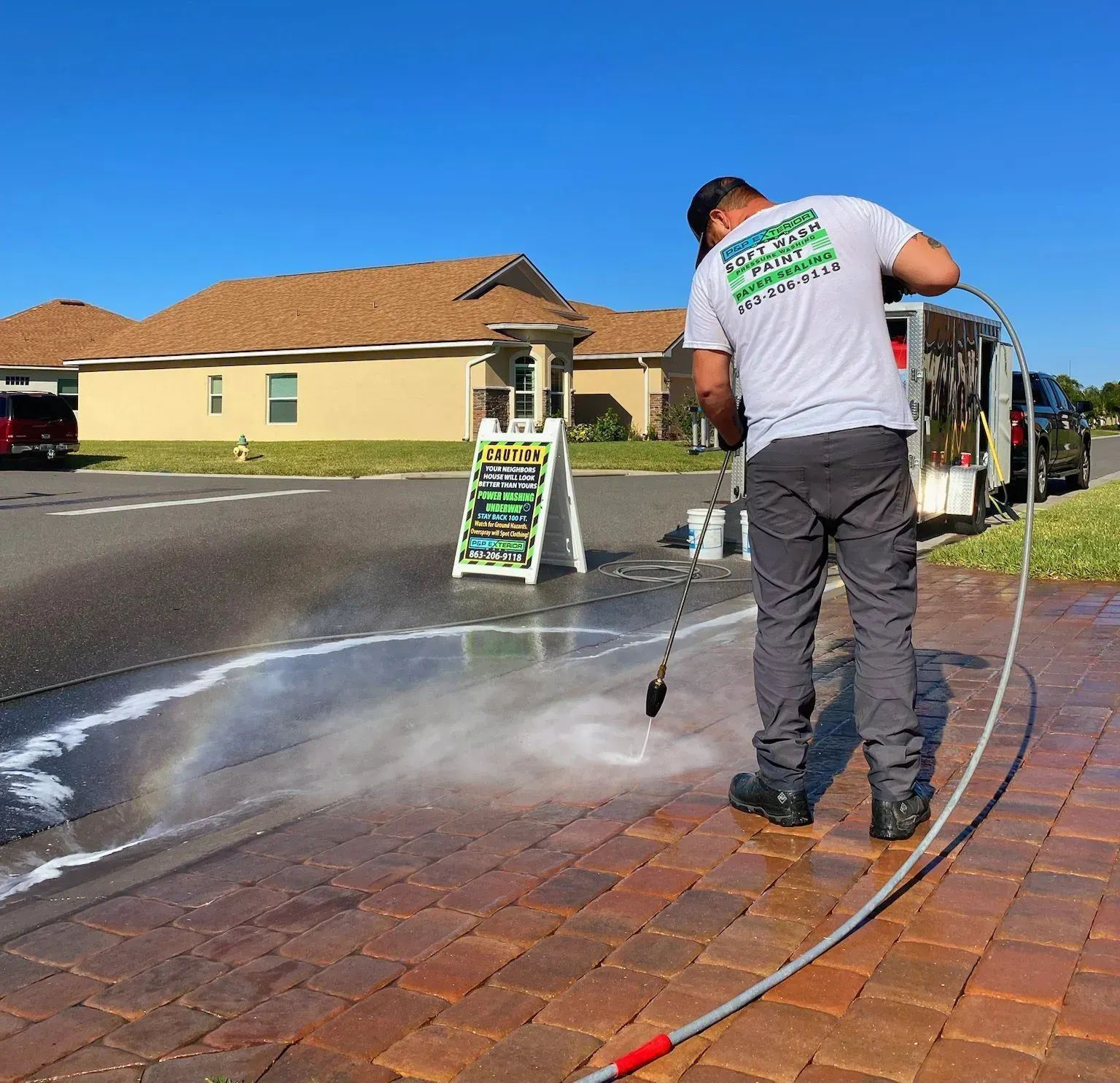
It's tempting to treat every stain as a pressure problem: more PSI, closer nozzle distance, more passes. On bare concrete this approach sometimes forces enough water into the pores to fade a stain slightly, but it comes with real tradeoffs. High pressure held too close etches the surface, leaving a visibly lighter, rougher patch that stands out even after the original stain is gone. On pavers, aggressive pressure at the wrong angle can blow out the joint sand between units, which then needs to be replaced before the surface is fully protected again.
None of that touches the chemistry underneath. And because plain pressure doesn't address what's actually bonded into an oil or rust stain, you can spend an entire afternoon working one spot and still see its shadow once the concrete dries.
Warning Never mix bleach-based cleaners with rust removers or with each other on the same section of driveway. Combining certain acidic and chlorine-based products can produce fumes that pose a real health risk even in an open outdoor space, and mixing chemistries can also neutralize both products before either one finishes working on the stain. If a stain doesn't respond to one treatment, rinse thoroughly and let the surface dry before trying a different product, rather than layering one on top of the other.
Real estate professionals broadly agree that neutral exterior and interior palettes generate the widest buyer appeal. Neutrals do not alienate buyers who cannot visualize past a bold personal choice, and they photograph well in listing images, which is where most buyer decisions begin.
Popular exterior palettes for 2024 and 2025 have leaned toward warm whites with contrasting dark trim, soft sage greens paired with warm wood accents, and gray-blue tones with crisp white detailing. These combinations feel current without being trend-dependent, which means they will not feel dated within a year.
Neutral Palettes That Sell
When Unique Colors Work in Your Favor
In neighborhoods where homes tend to look similar, a thoughtfully distinct color can make a property stand out in listing searches and in person. The key is contrast within context. A home that reads as intentional and well-maintained in a color that differs from its neighbors gains attention without appearing out of place.
Consulting a color expert or using digital rendering tools to preview color combinations before committing eliminates the guesswork and reduces the risk of a choice that narrows rather than expands buyer interest.
Sealing After Cleaning Keeps New Marks From Setting In
Once a driveway or paver surface is clean, a penetrating sealer changes how it behaves the next time something drips on it. Sealers reduce the size of the pores at the surface level, so oil, rust-causing moisture, and other contaminants have a harder time working their way down into the material in the first place. A sealed surface still needs the spill wiped up promptly, but the margin for error is much wider. Instead of a weekend drip becoming a permanent shadow, it stays closer to the surface, where a simple cleaning handles it before it has a chance to bond in. This is especially relevant for paver driveways and walkways, where the joints between units are more vulnerable to staining and shifting than a solid concrete slab.
Real estate professionals broadly agree that neutral exterior and interior palettes generate the widest buyer appeal. Neutrals do not alienate buyers who cannot visualize past a bold personal choice, and they photograph well in listing images, which is where most buyer decisions begin.
Popular exterior palettes for 2024 and 2025 have leaned toward warm whites with contrasting dark trim, soft sage greens paired with warm wood accents, and gray-blue tones with crisp white detailing. These combinations feel current without being trend-dependent, which means they will not feel dated within a year.
Neutral Palettes That Sell
When Unique Colors Work in Your Favor
In neighborhoods where homes tend to look similar, a thoughtfully distinct color can make a property stand out in listing searches and in person. The key is contrast within context. A home that reads as intentional and well-maintained in a color that differs from its neighbors gains attention without appearing out of place.
Consulting a color expert or using digital rendering tools to preview color combinations before committing eliminates the guesswork and reduces the risk of a choice that narrows rather than expands buyer interest.
Frequently Asked Questions
Will a rust stain come back after it's removed?
It can, if the source is still present. A rusting sprinkler head or metal furniture leg keeps leaching iron oxide, so removing or relocating the source is what stops the cycle.
Can I use the same product on rust and oil stains?
No. Rust needs an acid-based treatment that reacts with iron oxide, while oil needs a degreaser that emulsifies petroleum. Using one on the other does very little because the chemistry doesn't match.
Why do tire marks show up worse in one part of the driveway than another?
Braking and turning create more friction and heat than driving straight, so spots where a car slows, pivots, or sits parked see more rubber transfer, curving toward the garage or street.
Does sealing a driveway remove existing stains?
No. Sealing is a protective step that comes after cleaning, not a substitute for it. Sealing over an existing oil or rust stain locks that discoloration in place, so clean first.
How soon after a fresh oil spill should it be treated?
As soon as practical. A spill treated within a day or two lifts far easier than one left for weeks. Even cat litter pressed onto a fresh drip pulls some oil out first.
Is it safe to pressure wash pavers the same way as a concrete driveway?
Not exactly. Pavers have sand-filled joints that high pressure can dislodge, unlike solid slabs. Cleaning pavers calls for lower pressure and wider fan patterns, leaning on the chemistry to do the work.
Real estate professionals broadly agree that neutral exterior and interior palettes generate the widest buyer appeal. Neutrals do not alienate buyers who cannot visualize past a bold personal choice, and they photograph well in listing images, which is where most buyer decisions begin.
Popular exterior palettes for 2024 and 2025 have leaned toward warm whites with contrasting dark trim, soft sage greens paired with warm wood accents, and gray-blue tones with crisp white detailing. These combinations feel current without being trend-dependent, which means they will not feel dated within a year.
Neutral Palettes That Sell
When Unique Colors Work in Your Favor
In neighborhoods where homes tend to look similar, a thoughtfully distinct color can make a property stand out in listing searches and in person. The key is contrast within context. A home that reads as intentional and well-maintained in a color that differs from its neighbors gains attention without appearing out of place.
Consulting a color expert or using digital rendering tools to preview color combinations before committing eliminates the guesswork and reduces the risk of a choice that narrows rather than expands buyer interest.
When the Right Treatment Beats Raw Pressure
The takeaway here is simple: a stained driveway rarely means a ruined one. Oil, rust, and tire marks each carry their own chemistry, and each lifts when the treatment matches the cause instead of fighting it with pressure alone. Reading the stain correctly before reaching for a product saves an afternoon of scrubbing that goes nowhere. Once you know a dark patch is grease and not rust, the path back to a clean surface stops being guesswork and starts being a matter of method.
Across Polk County, FL, P&P Exterior Wash, LLC
has spent 15
years learning which patches respond to degreasers, which need an acid treatment, and which come down to hot water and steady agitation. Andrew and Savana's team treats the stain first and cleans the surface around it, so a driveway comes back looking even rather than patched. That mix of the right chemistry and patient technique is what turns a mark most people write off as permanent into one that finally lets go.