Pavers Faded and Cracking After a Few Florida Summers? Why Sealing Slows It
Real estate professionals broadly agree that neutral exterior and interior palettes generate the widest buyer appeal. Neutrals do not alienate buyers who cannot visualize past a bold personal choice, and they photograph well in listing images, which is where most buyer decisions begin.
Popular exterior palettes for 2024 and 2025 have leaned toward warm whites with contrasting dark trim, soft sage greens paired with warm wood accents, and gray-blue tones with crisp white detailing. These combinations feel current without being trend-dependent, which means they will not feel dated within a year.
Neutral Palettes That Sell
When Unique Colors Work in Your Favor
In neighborhoods where homes tend to look similar, a thoughtfully distinct color can make a property stand out in listing searches and in person. The key is contrast within context. A home that reads as intentional and well-maintained in a color that differs from its neighbors gains attention without appearing out of place.
Consulting a color expert or using digital rendering tools to preview color combinations before committing eliminates the guesswork and reduces the risk of a choice that narrows rather than expands buyer interest.
Quick Answer: Pavers fade and wear in Florida because intense UV light bleaches the color, daily storms and humidity keep the surface wet, and loose joint sand lets weeds, algae, and shifting take hold. Sealing does not rebuild a damaged base or reverse deep cracks, but it does slow the surface damage that makes pavers look tired. A good sealer adds UV resistance, blocks moisture and oil from soaking in, and locks the joint sand in place. The best time to seal is right after a thorough cleaning, before the fading and staining have a few more seasons to dig in.
You bought the house, or had the patio laid, when the pavers were rich and even in color. A few Florida summers later, the reds have gone chalky, the charcoal has faded toward gray, and the area by the pool looks a shade lighter than the shaded strip by the fence. A few edges have chipped. A hairline crack runs across one paver near the garage. The joints between them are thin and gritty, with weeds poking through in places and green film in the low spots after every rainy week. You sweep, you rinse, and it never looks the way it did.
That slow decline is not a sign that you picked the wrong product or that the installer cut corners. It is what Central Florida does to unprotected hardscape. Understanding what is actually happening on the surface makes it much easier to see where sealing helps, where it does not, and when it is worth doing.
Real estate professionals broadly agree that neutral exterior and interior palettes generate the widest buyer appeal. Neutrals do not alienate buyers who cannot visualize past a bold personal choice, and they photograph well in listing images, which is where most buyer decisions begin.
Popular exterior palettes for 2024 and 2025 have leaned toward warm whites with contrasting dark trim, soft sage greens paired with warm wood accents, and gray-blue tones with crisp white detailing. These combinations feel current without being trend-dependent, which means they will not feel dated within a year.
Neutral Palettes That Sell
When Unique Colors Work in Your Favor
In neighborhoods where homes tend to look similar, a thoughtfully distinct color can make a property stand out in listing searches and in person. The key is contrast within context. A home that reads as intentional and well-maintained in a color that differs from its neighbors gains attention without appearing out of place.
Consulting a color expert or using digital rendering tools to preview color combinations before committing eliminates the guesswork and reduces the risk of a choice that narrows rather than expands buyer interest.
What Florida Summers Actually Do to Pavers
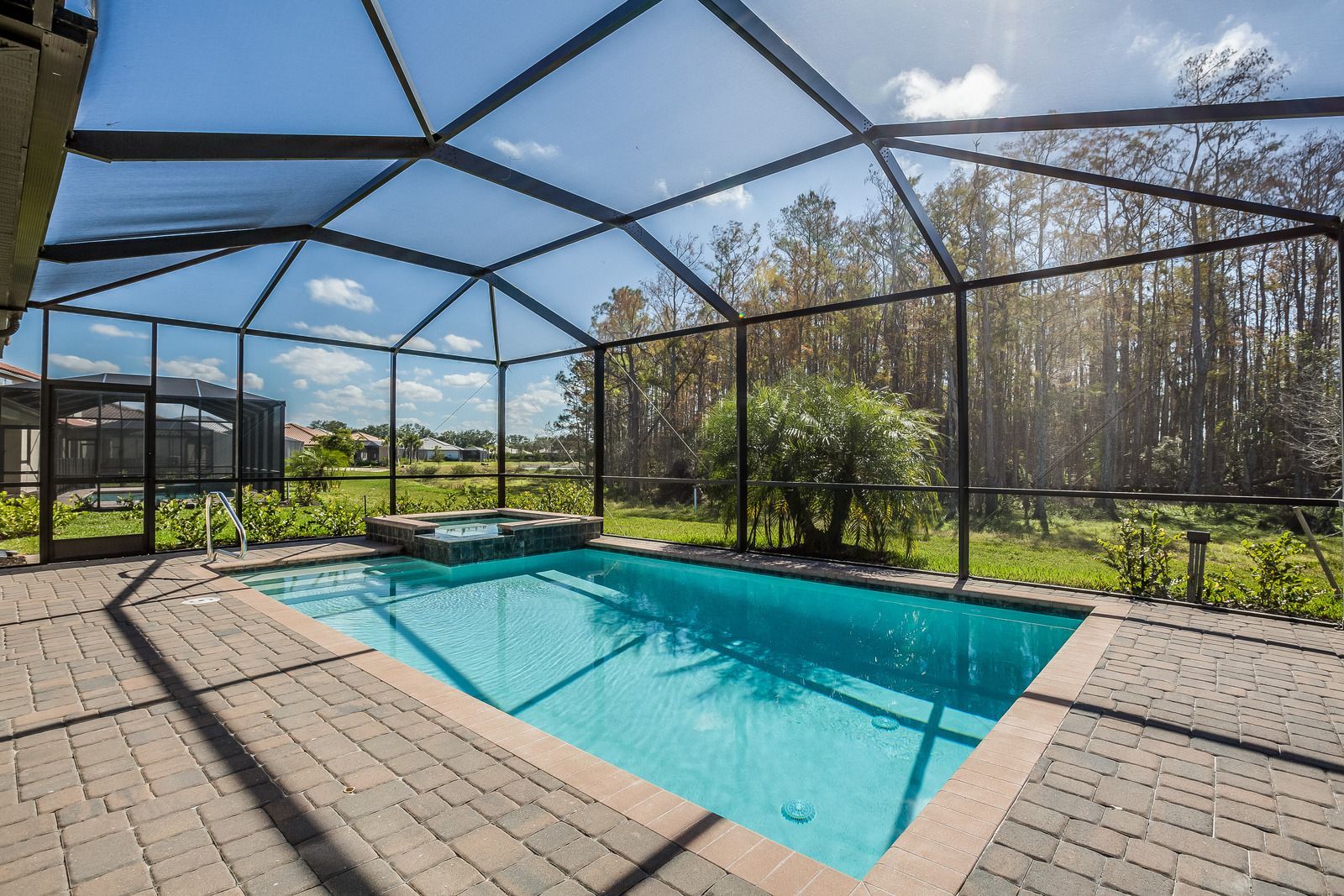
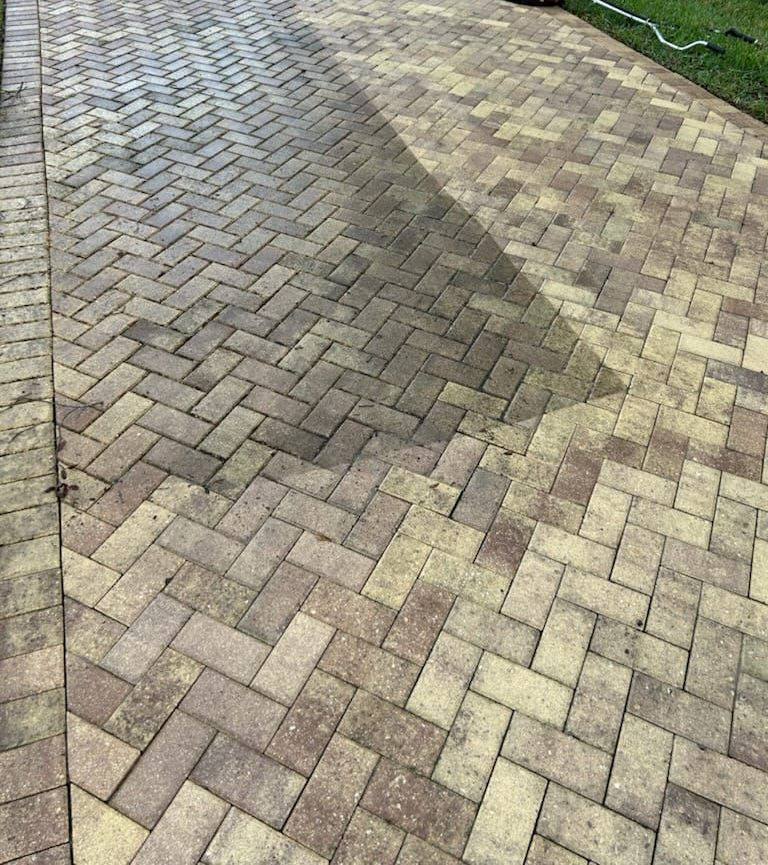
Concrete pavers get their color from pigment mixed into the cement. That pigment sits in the top layer of the paver, and that top layer takes the full hit of Florida sunshine. Strong UV light breaks down pigments over time, and the cement paste around them slowly weathers away, exposing the lighter sand and aggregate underneath. The result is the washed out, chalky look that shows up first on the surfaces that get the most direct sun, such as driveways, pool decks, and south facing patios.
Heat adds to the stress. A paver in full summer sun can get far hotter than the air around it, and then an afternoon thunderstorm drops cool water on it within minutes. That repeated swing from hot and dry to cool and soaked puts small stresses on the surface again and again. Over many seasons, the top of the paver can begin to flake, pit, or chip at the edges.
Humidity and rain do the rest. Pavers are porous. Moisture works its way into the surface, carrying dirt, pollen, and organic debris with it. Algae and mildew feed on that film, which is why the shady corners and the low spots that stay damp turn green or black first. Once a surface stays damp, it ages faster and holds stains harder.
Real estate professionals broadly agree that neutral exterior and interior palettes generate the widest buyer appeal. Neutrals do not alienate buyers who cannot visualize past a bold personal choice, and they photograph well in listing images, which is where most buyer decisions begin.
Popular exterior palettes for 2024 and 2025 have leaned toward warm whites with contrasting dark trim, soft sage greens paired with warm wood accents, and gray-blue tones with crisp white detailing. These combinations feel current without being trend-dependent, which means they will not feel dated within a year.
Neutral Palettes That Sell
When Unique Colors Work in Your Favor
In neighborhoods where homes tend to look similar, a thoughtfully distinct color can make a property stand out in listing searches and in person. The key is contrast within context. A home that reads as intentional and well-maintained in a color that differs from its neighbors gains attention without appearing out of place.
Consulting a color expert or using digital rendering tools to preview color combinations before committing eliminates the guesswork and reduces the risk of a choice that narrows rather than expands buyer interest.
Fading Versus Cracking: Two Different Problems
It helps to separate what you are seeing, because the two problems have different causes and sealing speaks to one of them far better than the other.
Fading is a surface problem. Color loss, chalkiness, and a dull, dry look are almost always about UV exposure and weathering of the top layer. A sealer is designed for exactly this. It sits in or on the surface and shields it from sun and moisture, and some formulas also deepen the color so the paver looks closer to how it did when new.
Cracking can have several causes. A hairline crack in a single paver can come from an impact, a heavy load, or the stress cycle of heat and rain. Cracking across a whole section, or pavers that have sunk, tilted, or shifted, usually points to what is under them: a base that settled, poor drainage, or washed out bedding sand. Sealing is not a fix for those problems. A sealer does not lift a sunken paver or repair a failing base, and a good contractor will tell you that plainly.
What sealing can do is slow the surface damage that leads to chipping and flaking, and keep the joints tight so the pavers stay locked together instead of loosening up. If you have pavers that are sinking or rocking underfoot, those need to be corrected first. Sealing goes on afterward to protect the repair.
Real estate professionals broadly agree that neutral exterior and interior palettes generate the widest buyer appeal. Neutrals do not alienate buyers who cannot visualize past a bold personal choice, and they photograph well in listing images, which is where most buyer decisions begin.
Popular exterior palettes for 2024 and 2025 have leaned toward warm whites with contrasting dark trim, soft sage greens paired with warm wood accents, and gray-blue tones with crisp white detailing. These combinations feel current without being trend-dependent, which means they will not feel dated within a year.
Neutral Palettes That Sell
When Unique Colors Work in Your Favor
In neighborhoods where homes tend to look similar, a thoughtfully distinct color can make a property stand out in listing searches and in person. The key is contrast within context. A home that reads as intentional and well-maintained in a color that differs from its neighbors gains attention without appearing out of place.
Consulting a color expert or using digital rendering tools to preview color combinations before committing eliminates the guesswork and reduces the risk of a choice that narrows rather than expands buyer interest.
Why Joint Sand Matters More Than Most People Think
The narrow lines between pavers look like a minor detail, but they are what holds the whole surface together. Sand packed into those joints keeps each paver from shifting against its neighbors and keeps water from washing out the bedding underneath.
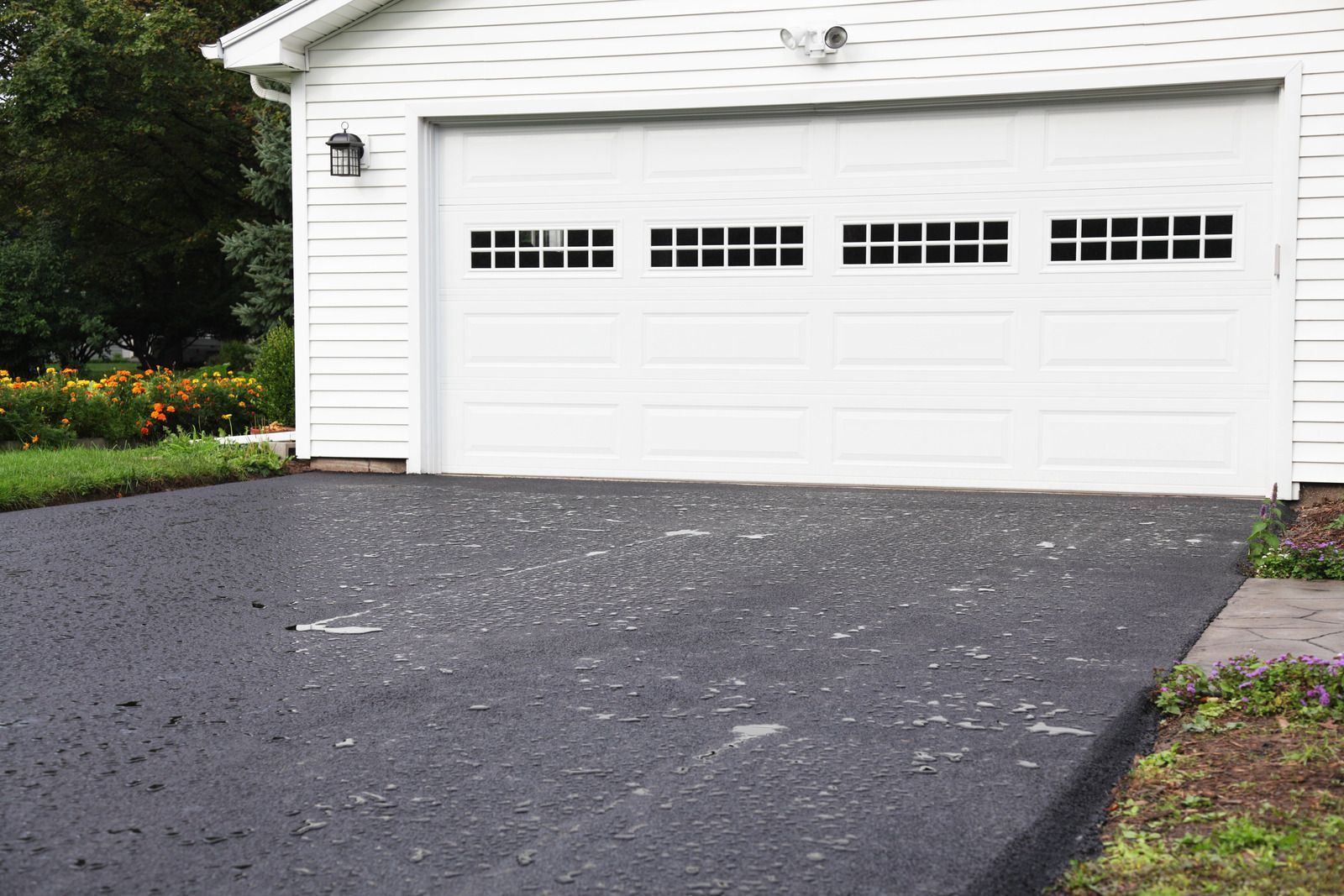
In Central Florida, joint sand takes a beating. Heavy downpours wash it out. Pressure washing that is too aggressive blasts it out. Ants carry it off. Once the joints go thin, weeds find a place to root, more water reaches the bedding layer, and the pavers begin to move. That movement is a common reason edges chip and corners crack, because pavers that rock against each other break down faster than pavers that are held firmly in place.
Sealing the surface and joints together stabilizes the sand so it stays where it belongs. It also tightens the top of the joint, so windblown seeds have fewer places to settle and weeds are less likely to appear. For homeowners who are tired of pulling weeds out of their driveway every few weeks, this alone is often the most noticeable benefit.
Tip: After a heavy rain, look at your joints. If the sand is low, washed out in channels, or missing near downspouts and edges, the surface is already losing the protection that keeps pavers locked in place. That is a good sign it is time to clean, refill, and seal rather than keep patching spots.
Real estate professionals broadly agree that neutral exterior and interior palettes generate the widest buyer appeal. Neutrals do not alienate buyers who cannot visualize past a bold personal choice, and they photograph well in listing images, which is where most buyer decisions begin.
Popular exterior palettes for 2024 and 2025 have leaned toward warm whites with contrasting dark trim, soft sage greens paired with warm wood accents, and gray-blue tones with crisp white detailing. These combinations feel current without being trend-dependent, which means they will not feel dated within a year.
Neutral Palettes That Sell
When Unique Colors Work in Your Favor
In neighborhoods where homes tend to look similar, a thoughtfully distinct color can make a property stand out in listing searches and in person. The key is contrast within context. A home that reads as intentional and well-maintained in a color that differs from its neighbors gains attention without appearing out of place.
Consulting a color expert or using digital rendering tools to preview color combinations before committing eliminates the guesswork and reduces the risk of a choice that narrows rather than expands buyer interest.
What a Sealer Does for a Paver Surface
A sealer is a protective layer that reduces how much the paver can absorb and how much sun damage the surface takes. In practical terms, a good sealer helps with several things at once.
First, it slows fading. Sealers formulated for sunny regions resist UV light, so the pigment holds its color longer instead of bleaching out. Pool decks, driveways, and open patios, which get the most exposure, tend to show the biggest difference.
Second, it blocks moisture. A sealed surface lets rainwater bead and run off rather than soak in. That keeps the surface drier between storms, which makes it harder for algae and mildew to establish and easier to rinse clean when they do show up.
Third, it guards against stains. Grease, oil, tire marks, fertilizer, and sunscreen all soak into bare pavers. A sealed surface gives you time to wipe a spill before it sets, instead of discovering a permanent dark patch a week later.
Fourth, it can bring back depth of color. Some sealers leave a natural, matte look, while others enhance the paver color and add sheen. Which one suits you depends on how the surface is used. A high sheen can look beautiful but may be slick when wet, so around a pool it is worth choosing a finish that balances appearance with traction.
Real estate professionals broadly agree that neutral exterior and interior palettes generate the widest buyer appeal. Neutrals do not alienate buyers who cannot visualize past a bold personal choice, and they photograph well in listing images, which is where most buyer decisions begin.
Popular exterior palettes for 2024 and 2025 have leaned toward warm whites with contrasting dark trim, soft sage greens paired with warm wood accents, and gray-blue tones with crisp white detailing. These combinations feel current without being trend-dependent, which means they will not feel dated within a year.
Neutral Palettes That Sell
When Unique Colors Work in Your Favor
In neighborhoods where homes tend to look similar, a thoughtfully distinct color can make a property stand out in listing searches and in person. The key is contrast within context. A home that reads as intentional and well-maintained in a color that differs from its neighbors gains attention without appearing out of place.
Consulting a color expert or using digital rendering tools to preview color combinations before committing eliminates the guesswork and reduces the risk of a choice that narrows rather than expands buyer interest.
Why Cleaning Comes Before Sealing
A sealer is only as good as the surface it goes onto. Sealing over dirt, algae, oil, or efflorescence, the whitish mineral deposit that sometimes shows up on concrete, locks that discoloration in place and can leave a cloudy finish. Moisture trapped under a sealer is another common cause of a hazy white film.
That is why the order matters: clean first, let the surface dry fully, make sure the joints are filled to the right level, and then seal. In a humid place like Polk County, drying time deserves real attention, because a surface that feels dry on top can still be holding moisture below.
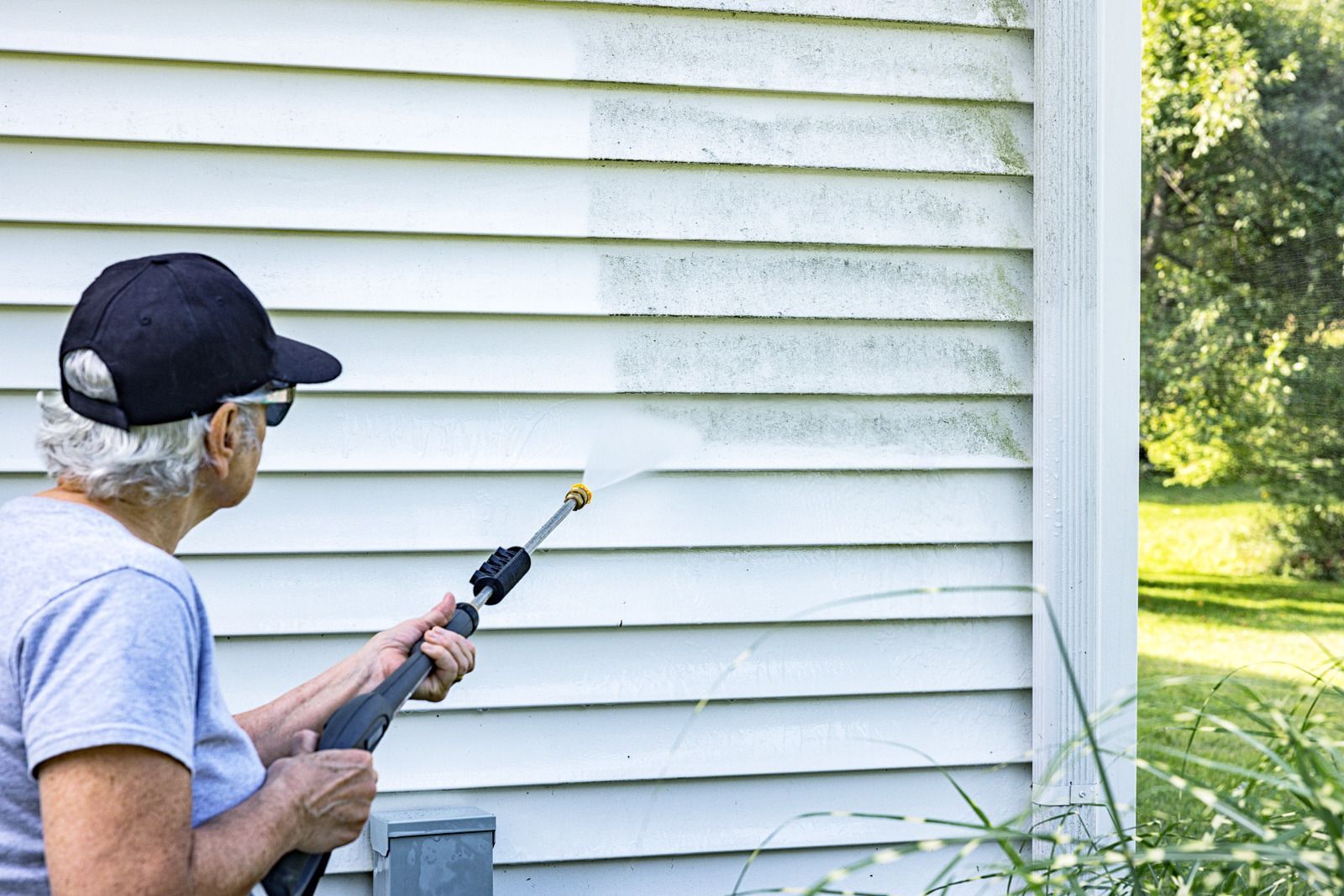
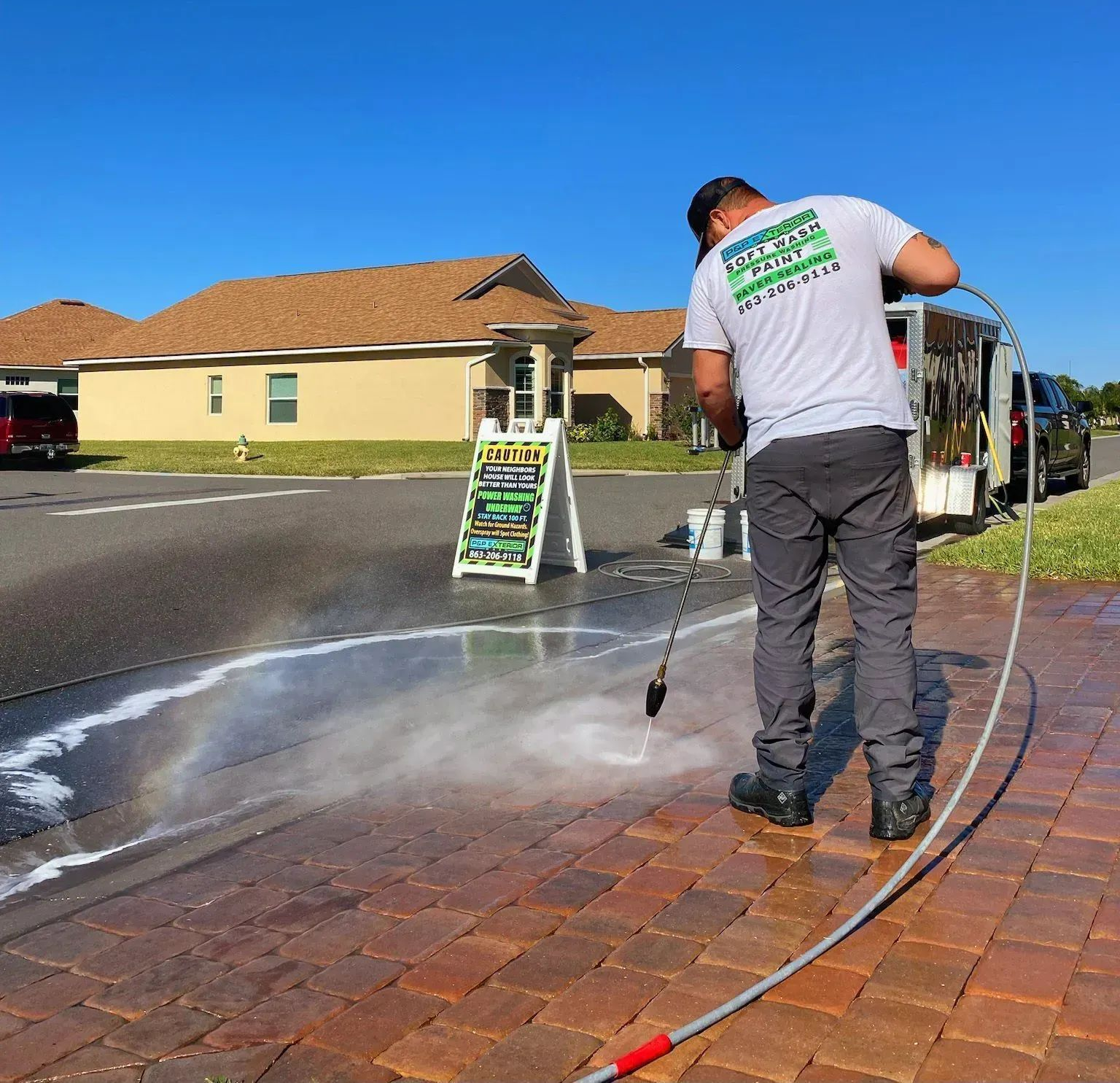
Cleaning pavers also takes care. Too much pressure or the wrong tip angle can etch the face of the paver and blow the sand out of the joints. A gentler approach with the right cleaning solution lifts the mildew, algae, and embedded grime without punishing the surface you are about to protect.
Warning Do not seal over a surface that is still damp, stained, or covered in algae. Sealer applied over moisture or grime can turn cloudy or blotchy, and it can trap the very problems you were trying to get rid of. If a milky film appears after sealing, stop and have it evaluated rather than adding another coat on top.
Real estate professionals broadly agree that neutral exterior and interior palettes generate the widest buyer appeal. Neutrals do not alienate buyers who cannot visualize past a bold personal choice, and they photograph well in listing images, which is where most buyer decisions begin.
Popular exterior palettes for 2024 and 2025 have leaned toward warm whites with contrasting dark trim, soft sage greens paired with warm wood accents, and gray-blue tones with crisp white detailing. These combinations feel current without being trend-dependent, which means they will not feel dated within a year.
Neutral Palettes That Sell
When Unique Colors Work in Your Favor
In neighborhoods where homes tend to look similar, a thoughtfully distinct color can make a property stand out in listing searches and in person. The key is contrast within context. A home that reads as intentional and well-maintained in a color that differs from its neighbors gains attention without appearing out of place.
Consulting a color expert or using digital rendering tools to preview color combinations before committing eliminates the guesswork and reduces the risk of a choice that narrows rather than expands buyer interest.
Timing the Job in Central Florida
Weather decides a lot here. Sealer needs a dry window to apply and cure, and a surprise afternoon storm in the middle of that window can ruin an otherwise careful job. Early in the day, with a clear forecast for the following hours, is the safest approach. The rainy season stretches through most of the summer, so many homeowners find that the drier stretches of fall, winter, and spring give more reliable conditions.
Waiting until the pavers look terrible is a common mistake. Fading and staining are far easier to protect against than to reverse. A surface that is cleaned and sealed while it still has good color holds that color longer. A surface that has already bleached out and picked up years of stains needs more cleaning work before a sealer can go on, and no sealer can restore pigment that has already worn away.
Sealing is also not a one time event. Sealed surfaces wear down with traffic, sun, and weather, and many owners reseal every few years depending on how much exposure and use the area gets. Driveways and pool decks tend to need attention sooner than a covered, lightly used walkway.
Real estate professionals broadly agree that neutral exterior and interior palettes generate the widest buyer appeal. Neutrals do not alienate buyers who cannot visualize past a bold personal choice, and they photograph well in listing images, which is where most buyer decisions begin.
Popular exterior palettes for 2024 and 2025 have leaned toward warm whites with contrasting dark trim, soft sage greens paired with warm wood accents, and gray-blue tones with crisp white detailing. These combinations feel current without being trend-dependent, which means they will not feel dated within a year.
Neutral Palettes That Sell
When Unique Colors Work in Your Favor
In neighborhoods where homes tend to look similar, a thoughtfully distinct color can make a property stand out in listing searches and in person. The key is contrast within context. A home that reads as intentional and well-maintained in a color that differs from its neighbors gains attention without appearing out of place.
Consulting a color expert or using digital rendering tools to preview color combinations before committing eliminates the guesswork and reduces the risk of a choice that narrows rather than expands buyer interest.
What Sealing Will Not Do
Being honest about limits is part of doing this well. Sealing does not fix poor drainage, a settled base, or pavers that have physically moved. It does not make a badly cracked paver whole again, although individual damaged pavers can often be replaced. It will not turn faded pavers back into brand new ones, though cleaning and a color enhancing sealer can bring back a surprising amount of depth. And it is not a substitute for ordinary care. Sweeping, rinsing, and wiping up spills still extend the life of the finish.
What it does is give your pavers a protective layer against the things Florida throws at them every single day. For a surface that takes sun, rain, humidity, foot traffic, and vehicles, that protection is often the difference between pavers that look dated in a handful of years and pavers that still look kept for much longer.
Real estate professionals broadly agree that neutral exterior and interior palettes generate the widest buyer appeal. Neutrals do not alienate buyers who cannot visualize past a bold personal choice, and they photograph well in listing images, which is where most buyer decisions begin.
Popular exterior palettes for 2024 and 2025 have leaned toward warm whites with contrasting dark trim, soft sage greens paired with warm wood accents, and gray-blue tones with crisp white detailing. These combinations feel current without being trend-dependent, which means they will not feel dated within a year.
Neutral Palettes That Sell
When Unique Colors Work in Your Favor
In neighborhoods where homes tend to look similar, a thoughtfully distinct color can make a property stand out in listing searches and in person. The key is contrast within context. A home that reads as intentional and well-maintained in a color that differs from its neighbors gains attention without appearing out of place.
Consulting a color expert or using digital rendering tools to preview color combinations before committing eliminates the guesswork and reduces the risk of a choice that narrows rather than expands buyer interest.
Frequently Asked Questions
Will sealing stop my pavers from cracking?
Not by itself. Sealing slows surface wear, flaking, and chipping, and keeps the joint sand in place. Cracks from a settled base, drainage trouble, or heavy loads come from underneath and must be corrected before sealing.
Can sealing bring back the original color of faded pavers?
It can improve it. A thorough cleaning removes dulling grime, and a color enhancing sealer deepens what pigment is left. Pavers that have lost a lot of pigment will not return to day one, but usually look richer.
How soon after installation should new pavers be sealed?
New pavers should be fully installed with joint sand set, then given time to dry and be cleaned first. Waiting for the surface to settle and efflorescence to clear helps the sealer bond evenly and look consistent.
Will a sealer make my pool deck slippery?
It can with a high gloss finish. A matte or natural look sealer keeps more texture and traction, which is usually better around a pool or any wet area. Testing a small corner first checks the result.
Does sealing help with weeds between pavers?
Yes. Sealing tightens the top of the joints and stabilizes the sand, so seeds have fewer places to settle and root. Weeds can still blow in and grow in any gap, but regular weeding usually drops noticeably.
How long do I have to wait before walking or parking on sealed pavers?
Many sealers allow light foot traffic the same day, while full strength takes longer, and vehicles need more time than people. The window depends on the product and Florida humidity, so keep the area clear until it cures.
Real estate professionals broadly agree that neutral exterior and interior palettes generate the widest buyer appeal. Neutrals do not alienate buyers who cannot visualize past a bold personal choice, and they photograph well in listing images, which is where most buyer decisions begin.
Popular exterior palettes for 2024 and 2025 have leaned toward warm whites with contrasting dark trim, soft sage greens paired with warm wood accents, and gray-blue tones with crisp white detailing. These combinations feel current without being trend-dependent, which means they will not feel dated within a year.
Neutral Palettes That Sell
When Unique Colors Work in Your Favor
In neighborhoods where homes tend to look similar, a thoughtfully distinct color can make a property stand out in listing searches and in person. The key is contrast within context. A home that reads as intentional and well-maintained in a color that differs from its neighbors gains attention without appearing out of place.
Consulting a color expert or using digital rendering tools to preview color combinations before committing eliminates the guesswork and reduces the risk of a choice that narrows rather than expands buyer interest.
Protecting the Surface Before Damage Digs In
Pavers that fade and chip after a few Florida summers are doing exactly what unprotected hardscape does in this climate. The sun bleaches the pigment, daily storms keep the surface soaked, and thinning joint sand lets the whole area loosen and fill with weeds. Seeing it that way makes the limits of sealing clear: it cannot lift a sunken paver or rebuild a failing base, but it slows the surface wear, staining, and fading that make a patio look tired years before it should.
The order is what makes the job hold. Clean thoroughly, let the surface dry, refill the joints, and only then seal, since a sealer locks in whatever it covers. P&P Exterior Wash, LLC
has spent 15
years protecting hardscape across Polk County, FL, and that experience is the difference between a finish that guards the color and one that traps the grime. Seal while the
pavers
still look good, reseal as the exposure wears it down, and the surface stays kept for years rather than seasons.